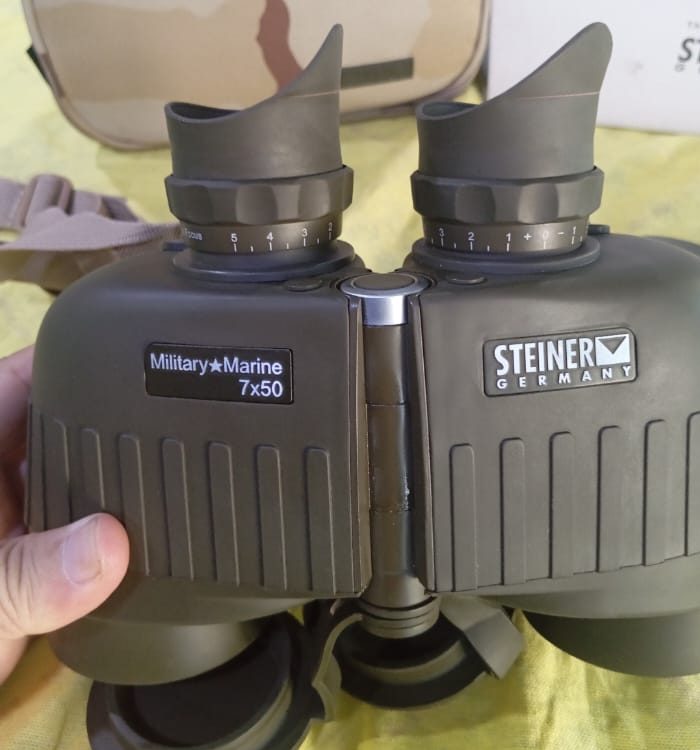
The Steiner 7×50 Military-Marine binoculars for bird watching are well-regarded for their durability, optical clarity, and performance in various conditions. Steiner is a well-known German manufacturer specializing in high-quality optical devices, including binoculars.
They are renowned for their durability, precision engineering, and superior optical performance.
Steiner 7×50 Military-Marine Binoculars for Bird Watching are popular among outdoor enthusiasts, bird watchers, hunters, and military professionals.
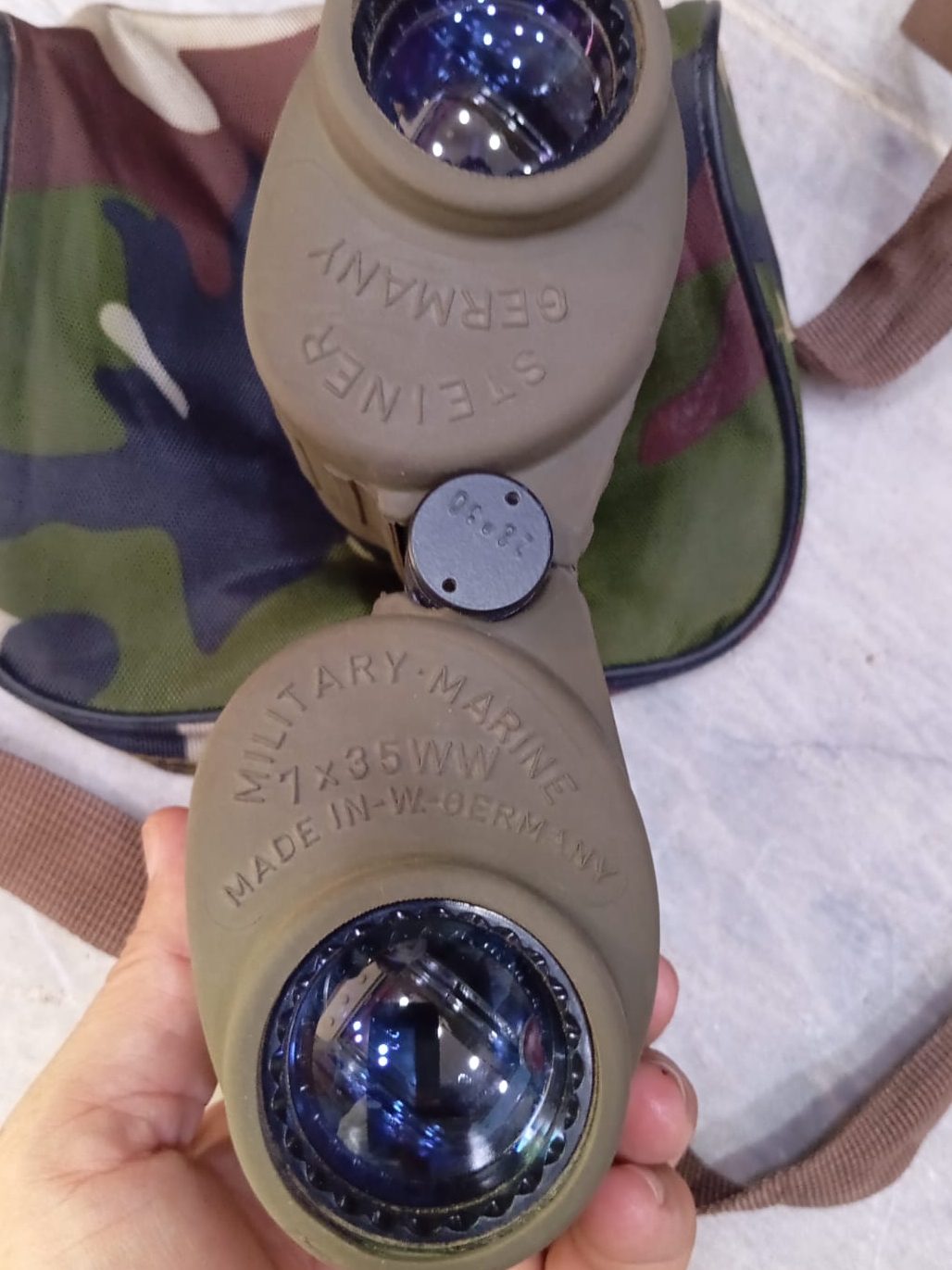
Here’s an overview of their features:
Key Features of Steiner 7×50 Military-Marine Binocular:
- Magnification and Objective Lens:
- 7x magnification.
- 50mm objective lens diameter.
- Optical Performance:
- High Contrast Optics for bright, clear images with excellent light transmission.
- The Sports-Auto Focus system keeps images sharp from 20 yards to infinity without constant adjustment.
- Durability:
- Rugged construction, designed to withstand harsh environments.
- Waterproof and fog-proof, making them reliable in wet and humid conditions.
- Rubber-armored housing for a secure, non-slip grip and shock resistance.
What are Steiner binoculars?
Steiner binoculars are high-quality optical devices manufactured by Steiner Optics, a company known for producing durable and precision-engineered binoculars. They are widely used for various applications, such as bird watching, hunting, marine activities, and military purposes.
They are known for their rugged construction, clarity, and advanced features, such as high-definition optics, waterproofing, fog-proofing, and ergonomic designs.
Fernglas Steiner Commander XP 7×50 Binocular mit Kompass
- Ergonomics:
- Fold-down eyecups for comfort and versatility, accommodating users with or without eyeglasses.
- Lightweight design for easy handling and reduced fatigue during extended use.
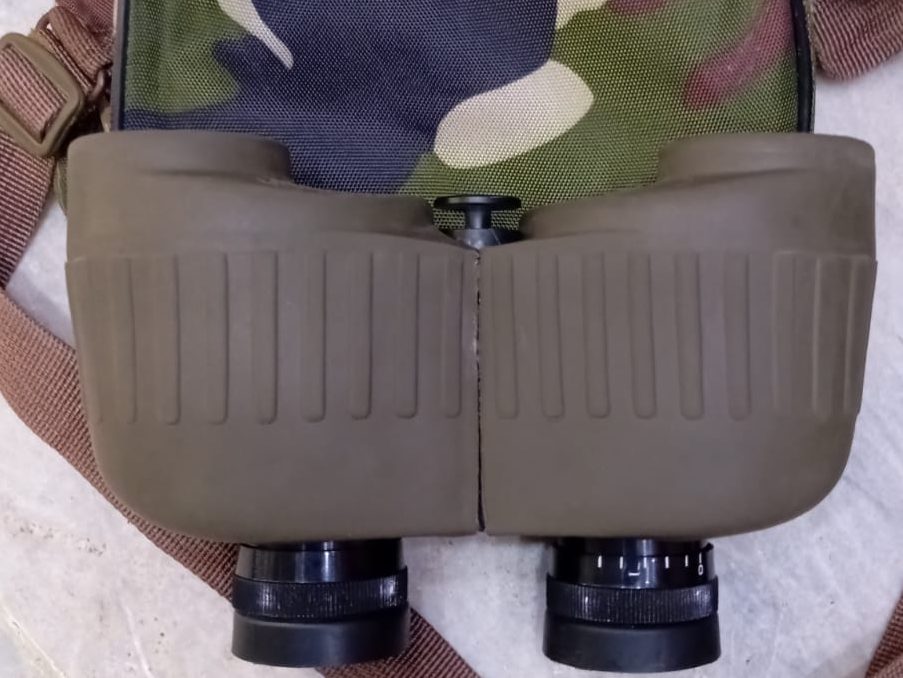
- Additional Features:
- Nitrogen-filled to prevent fogging.
- Floating prism system for shock absorption.
- Porro prism design for better depth perception and wide field of view.
What is a porro prism in binoculars?
A porro prism is a type of optical prism used in binoculars to correct the orientation of the image. Here are the key points about Porro prisms in binoculars:
- Image Orientation: Light passing through the objective lenses (the front lenses) of binoculars initially forms an image that is upside down and reversed from left to right. Porro prisms correct this, ensuring the image appears right-side-up and correctly orientated when viewed through the eyepieces.
- Design: Porro prisms are characterised by their distinctive Z-shaped design. They use a pair of prisms arranged to reflect light multiple times, effectively changing the light’s path without altering the binoculars’ overall length.
- Optical Path: The design of Porro prisms results in a longer optical path than roof prisms (another type of prism used in binoculars). This can lead to better depth perception and a wider field of view.
- Alignment: Binoculars with Porro prisms have a wider separation between the objective lenses and the eyepieces. This alignment improves 3D image perception and offers a more immersive viewing experience.
- Advantages:
- Typically less expensive to produce than roof prisms.
- It can offer superior image quality with better depth and contrast.
- Often provide a wider field of view.
- Disadvantages:
- Bulkier and heavier compared to roof prism binoculars.
- More prone to misalignment and require precise assembly.
Overall, Porro prism binoculars are known for their excellent optical performance and are often favored for activities like birdwatching, astronomy, and general outdoor use.
What is Roof Prism in Steiner 7×50 Military-Marine Binocular for Bird Watching?
Roof prisms in binoculars are an optical design that allows the binoculars to be more compact and streamlined compared to other designs, such as Porro prisms. In a roof prism system, the prisms are aligned in a straight line with the eyepiece and objective lens, which results in a more linear and often slimmer shape. Here are some key points about roof prisms in binoculars:
- Design and Construction:
- The roof prism design allows for a more compact and lightweight body.
- The prisms are typically more complex and require precise alignment to ensure high optical quality.
- Optical Performance:
- Roof prisms can provide high-quality images, but they generally require better coatings to achieve the same level of optical performance as Porro prisms.
- These coatings include phase correction and dielectric coatings, which enhance light transmission and image clarity.
- Durability:
- Binoculars with roof prisms are often more rugged and durable because their straight-line design is more resistant to misalignment.
- They are usually better sealed against dust and moisture, making them a popular choice for outdoor and harsh environments.
- Cost:
- Roof prism binoculars tend to be more expensive due to their complex design and the need for high-quality coatings to maintain optical performance.
- Applications:
- They are commonly used for birdwatching, hiking, and other outdoor activities where portability and durability are essential.
- Their sleek design also makes them popular for casual use and travel.
In summary, roof prism binoculars offer a compact and durable option with excellent optical performance, although they may be more expensive than Porro prism binoculars.
Use Cases:
- Ideal for marine and military use due to its robustness and ability to perform in challenging conditions.
- Suitable for outdoor enthusiasts, birdwatchers, and hunters who need reliable and clear optics.
- Great for stargazing and other low-light conditions thanks to the large objective lens and high-light transmission.